
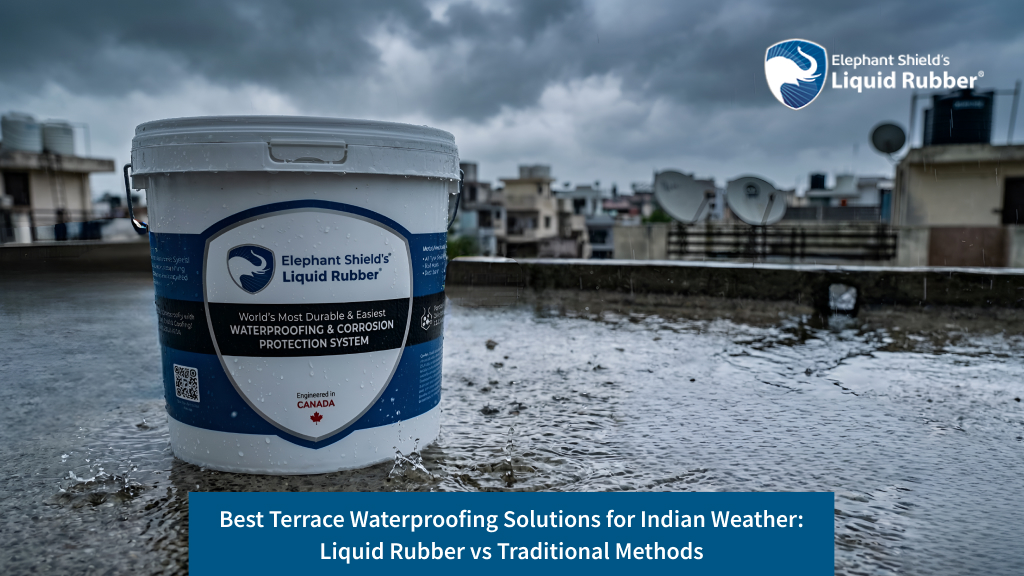
Discover the best terrace waterproofing solutions for Indian weather. This guide compares Liquid Rubber vs traditional waterproofing methods, helping homeowners and businesses choose a durable, cost-effective solution for long-lasting protection against leaks, cracks, and monsoon damage.

India is home to a diverse and unpredictable climate with extremes of heat and cold, and heavy, fast and furious monsoon rains. With such a variety of climate and terrain, leaky terraces are a regular occurrence in both residential and commercial buildings.
Waterproofing failures in buildings are manifests as fine cracks,wall counters that are damp, obscured visibility due to mold in terraces, and ultimately structural failure.
As such, due diligence and careful thought is required to select the best options available for terrace waterproofing.
Today’s Liquid Rubber waterproofing is a new entrant to the Indian markets as a form of modern technology, while old, more traditional methods like bitumen sheets and cementitious coatings waterproofing.
Liquid Rubber vs traditional methods will be the primary comparison in this blog post and I will offer suggestions to make waterproofing economically and practically easier to carry out with regard to the Indian scenario.
What do Monsoons and high temperatures with high humidity do to terraces?
India's climatic conditions affect the terraces of buildings most and the most important of these is:
What is the waterproofing of concrete (Cementitious) System?
Waterproofing of concrete (cementitious) systems is the most widespread form of waterproofing because they are the cheapest.
Advantages:
Disadvantages:
Waterproofing with bitumen sheets and membranes has been used in older construction.
Have features like: torch/heat application safety risk in working failure due to [and] UV and heat
Membrane sheeting joints and overlaps are often the first sites for leaks.
Due to simple waterproofing and terrace coatings, the weathered and aged Indian conditions, the ineffective reapplications, the traditional waterproofing methods result in poor durability and ineffective results
What is Liquid Rubber Waterproofing?
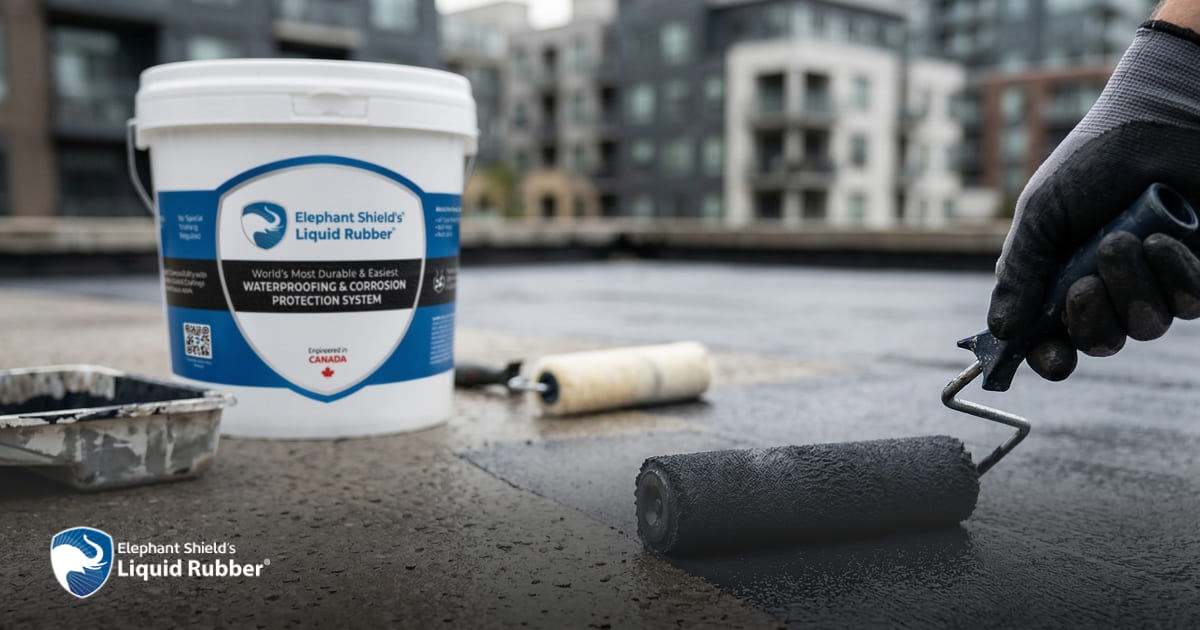
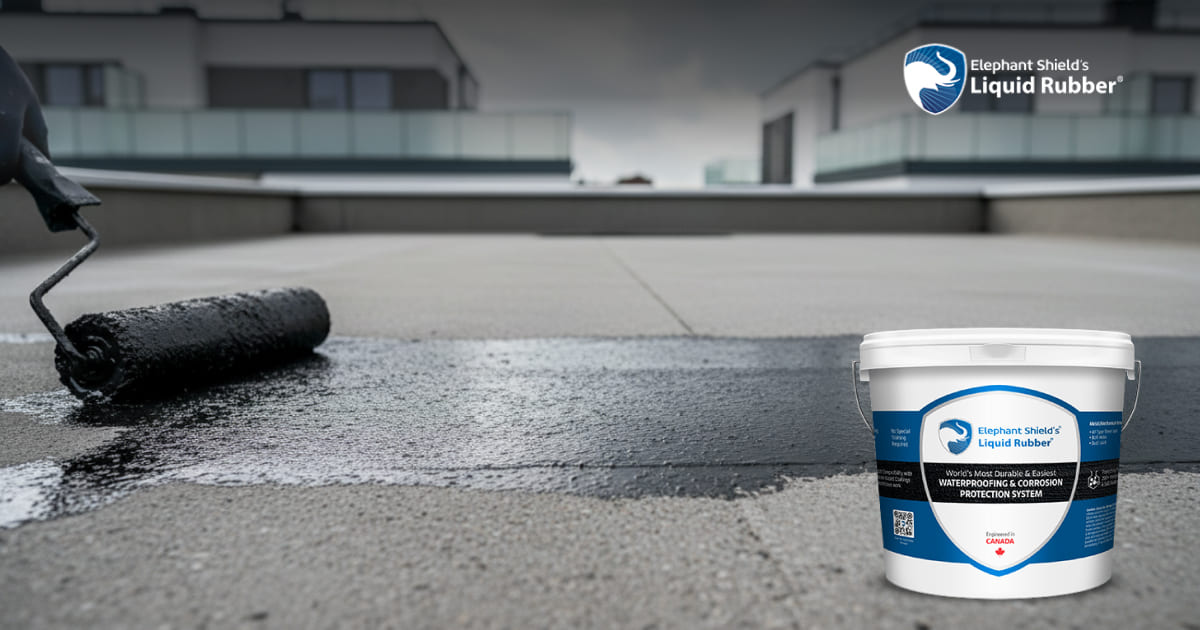
Liquid Rubber is a contemporary method for waterproofing that is installed in a liquid form and, once cured, creates a continuous rubber membrane.
Key characteristics:
tile, and metal (not sure which), and a seamless membrane of liquid rubber will prevent water from passing through (even if there are cracks in the surfaces).
A few reasons for this are:
Liquid Rubber will outlast most traditional waterproofing systems by 10 - 15 years. This is because Liquid Rubber will outlast traditional methods by 10 - 15 years and is less likely to deteriorate from exposure to sunlight and from sealing bitumen sheets (which deteriorate, and quickly) so it will last 3 - 5 years longer than cement.
With Liquid Rubber, there are no compromises like traditional contractor systems, which can be extremely flexible.
Liquid Rubber is flexible, and as such, can expand and contract with the movement of the surface, and because of this, it will cost less in the long run. Liquid Rubber is also a better long-term investment than traditional waterproofing.
Using liquid rubber as the waterproofing method for commercial terraces involves a higher direct cost compared to cement and bitumen. However, in the long run, rubber is the least expensive method for protecting the structure from micro cracking.
Liquid rubber is ideal for new construction as it is the most cost effective to protect micro cracks in the new construction. Liquid rubber is also excellent for old terraces as it is a waterproofing renovation and better than sealed waterproofing. In commercial buildings, waterproofing is more demanding than in residential buildings due to the higher structural loads.
Liquid Rubber's flexibility and durability is why it exceeds the performance demands for residential, commercial and industrial roofing. Services like Liquid Rubber by Elephant Shield are reliable and perform well in a variety of applications.
What To Look For In A Waterproofing Company
Pick companies that: Have worked with Liquid Rubber before Use materials that are dependable and certified Offer post sale service and warranties
Importance Of Good Quality Products To Waterproofing
For waterproofing Indian terraces, Liquid Rubber provides an excellent long-term and economical solution. Liquid Rubber waterproofing solution optimizes the cost and enhances the durability of center clogging wheels.
Cost-effectiveness can be realized with traditional waterproofing structures. However, Liquid Rubber’s durability and functionality are unmatched. Liquid Rubber offers the following:
Long lasting elasticity, seamless crack coverage and cost savings, long lasting durability.
Elephant Shield Liquid Rubber will eliminate leaks from your old shuttered terraces. Don’t continue doing repeated repairs on your old shuttered terraces that are leaking.
With modern contracting and certified materials, waterproofing should be done before the coming of the next rainy season.

Waterproofing Specialist
The ideal waterproofing system terrace should cope with harsh rain and changing weather Liquid Rubber is the ideal Waterproofing systems for terrace
The answer is yes Liquid Rubber is ideal for old terrace and it is great, Liquid Rubber will close the gaps on old terrace without the need of removing the old terrace.